

Read the slab first. Pick the floor second.
Epoxy flooring for Pikeville garages and living spaces, chosen by the room and the concrete under it. Beto tests and grinds every slab himself before any resin goes down.
Insured and bonded · 5 years · Beto pours every floor himself
Photos first, then a number
Two or three phone pictures and the rough size of the room are plenty to start with.
What gets checked before anybody talks color.
Most people call with a color already picked out. Beto starts lower than that, at the concrete, because the slab decides what will hold on it.
Moisture comes first. A slab pushing water vapor up through it will lift almost any coating, so it gets tested before a system is chosen or a price is given.
Then the cracks. Fine hairline cracking is normal on the sandy ground around here, and it gets chased out and filled during the grind. A wide crack, or one where one side sits higher than the other, gets pointed out on the spot.
Old coatings are next. Paint, a peeling store kit or a worn-out sealer all come off in the grind, but how hard they hang on changes how long the first day runs.
The last check matters most: how you actually use the room. A garage with two trucks and a workbench needs a different floor than a bonus room where people walk around in socks. Be honest with Beto about what goes on in there, because that answer picks the system more than any color chart.
A color chart cannot show you any of that.
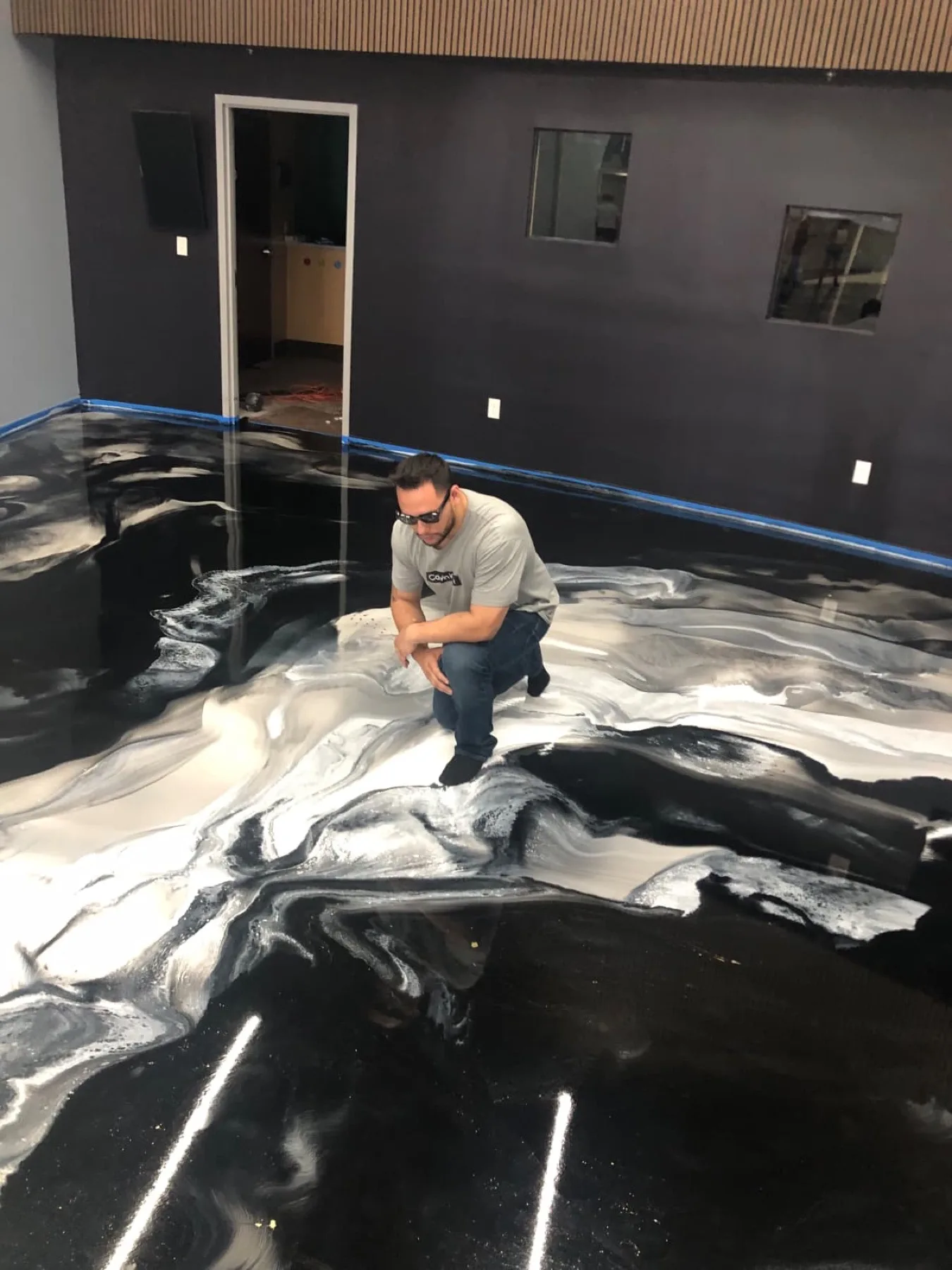
Flake, metallic or quartz. The room makes the call.
A brochure shows you a pretty floor. Your room decides which one lasts.
For a working garage, flake is where most people land. The vinyl chips sit in the base coat under a clear topcoat, and the speckle covers tire marks and grit between sweeps. It is the forgiving choice.
Metallic is the floor people call about after they see Beto’s work! The pigment keeps moving while the resin is wet, so no two come out alike. It belongs in a room somebody will actually look at, like a den, a studio or a garage that doubles as a hangout.
Quartz is the hard-wearing pick. Graded sand set in resin gives it a texture that grips under wet boots, so it suits a laundry room, a mudroom or a shop corner with a utility sink.
Sometimes the right answer is no coating at all, and Beto will tell you that. Some slabs only want a penetrating concrete seal. Outdoor slabs belong on the patio coatings or pool deck coatings pages, where grip and sun matter more than shine.
A garage and a den do not want the same floor.
Out in the garage
A garage floor takes hot tires, oil drips, dropped wrenches and wet shoes coming in from the rain. Grip and easy cleanup count for more than looks out here. Most garages end up flake, with extra grit in the topcoat near the door where water gets tracked in.
Inside the house
Indoors, the floor becomes part of the room. That is where metallic earns its keep, because the light from the windows moves across it through the day. Traffic is lighter and the furniture mostly stays put, so a smoother finish is easy to live with.
Somewhere in between
Laundry rooms, mudrooms and the back door from the yard get wet and get walked hard. That is quartz territory, or a flake floor with a heavier grit worked into the topcoat.
The garage in the photo is a flake floor: light gray chips, broadcast evenly from wall to wall.

Older slabs around here breathe from underneath.
A good number of houses in this corner of Wayne County were built before a vapor barrier under the slab was routine. Nothing looks wrong with those floors. They just pass moisture up through the concrete all year, and a water table that rises and falls with the seasons keeps feeding it.
Bare concrete can live with that. A coating sealed over the top cannot. The vapor gets trapped under the film, pressure builds, and eventually the floor blisters near the walls and starts letting go.
Every slab gets tested. The age of the house is a good guess, and a guess is no test.
So the test happens on the first visit, before any number gets written down. A dry slab keeps every system on the table. A damp one narrows the list to products made to handle vapor, and Beto will price that version straight with you, even when it is not the floor you had your heart set on.
If a slab is too wet for any coating, you hear that before you have spent a thing.
Grind day, pour day, then hands off.
Day one is loud. The grinders and dust extractors come off the trailer, the slab gets taken down to open concrete, and every crack and pit the grind finds gets filled. By evening the floor is pale and plain, which surprises anyone who was expecting color.
Day two is the pour. Base coat, then the chips or pigment, then the topcoat, and this half moves quickly. Socks and clean shoes are fine the next morning. Cars stay out until day three in warm weather and day four when it turns cool, since resin keeps hardening long after it looks done.
The room has to be empty before that first morning. Shelves, bins and the old fridge in the corner all need somewhere else to live for a few days, because the slab gets ground wall to wall.
Pikeville is an easy run up from our base in Goldsboro, inside Wayne County. The epoxy flooring page covers the work in every town we serve, and the Pikeville page has the rest of what we do there. Not sure where your slab fits? Get photos to Beto and he will tell you what he is seeing.
Epoxy floor questions from Pikeville homeowners.
Which epoxy system is best for a garage?
For most garages it is flake. The chips hide dust and tire marks, the topcoat cleans with a mop, and grit in the topcoat keeps it from getting slick by the door. If the garage doubles as a showpiece, metallic works there too. It just shows wear sooner than a busy chip pattern.
Can you put epoxy in a living room or bedroom?
If the room sits on a slab, yes. Once the old carpet or tile is out, any leftover glue comes off in the grind, and the slab takes a coating like a garage floor would. Metallic is the usual pick inside the house, because a living room is meant to be looked at.
Why do you test for moisture on every slab?
Because the house cannot tell us. A lot of older homes in this area sit on slabs with no vapor barrier, and the only way to know what is coming up through the concrete is to test it. A coating sealed over damp concrete is how a floor ends up lifting.
How long before I can use the floor?
Walk on it the next morning in socks or clean shoes. Vehicles wait until day three in warm weather and day four when it is cooler, since the resin is still hardening underneath. Park on it early and the tires can leave marks that stay in the floor for good.
Is flake or metallic easier to keep clean?
Flake, by a long way. The speckled pattern hides dust, pet hair and grit, so the floor looks clean between sweeps. A metallic floor is smooth and glossy, which makes it easy to mop but quick to show footprints and dust. Both clean up with a damp mop and mild soap.
Can you tell me what it costs over the phone?
Not honestly. Two garages the same size can be very different jobs once the old coating, the cracks and the moisture reading are known. Photos get you a rough idea of what the job involves, and Beto gives a firm number after he has walked the slab himself.

Send me photos of the slab.
A couple of phone pictures and the rough size of the room is all it takes! Beto looks them over, tells you which system makes sense, then comes out to test the concrete.
Calls go straight to Beto Ponce. Want to see finished floors first? The gallery has both flake and metallic jobs to look through.
(919) 440-1333