
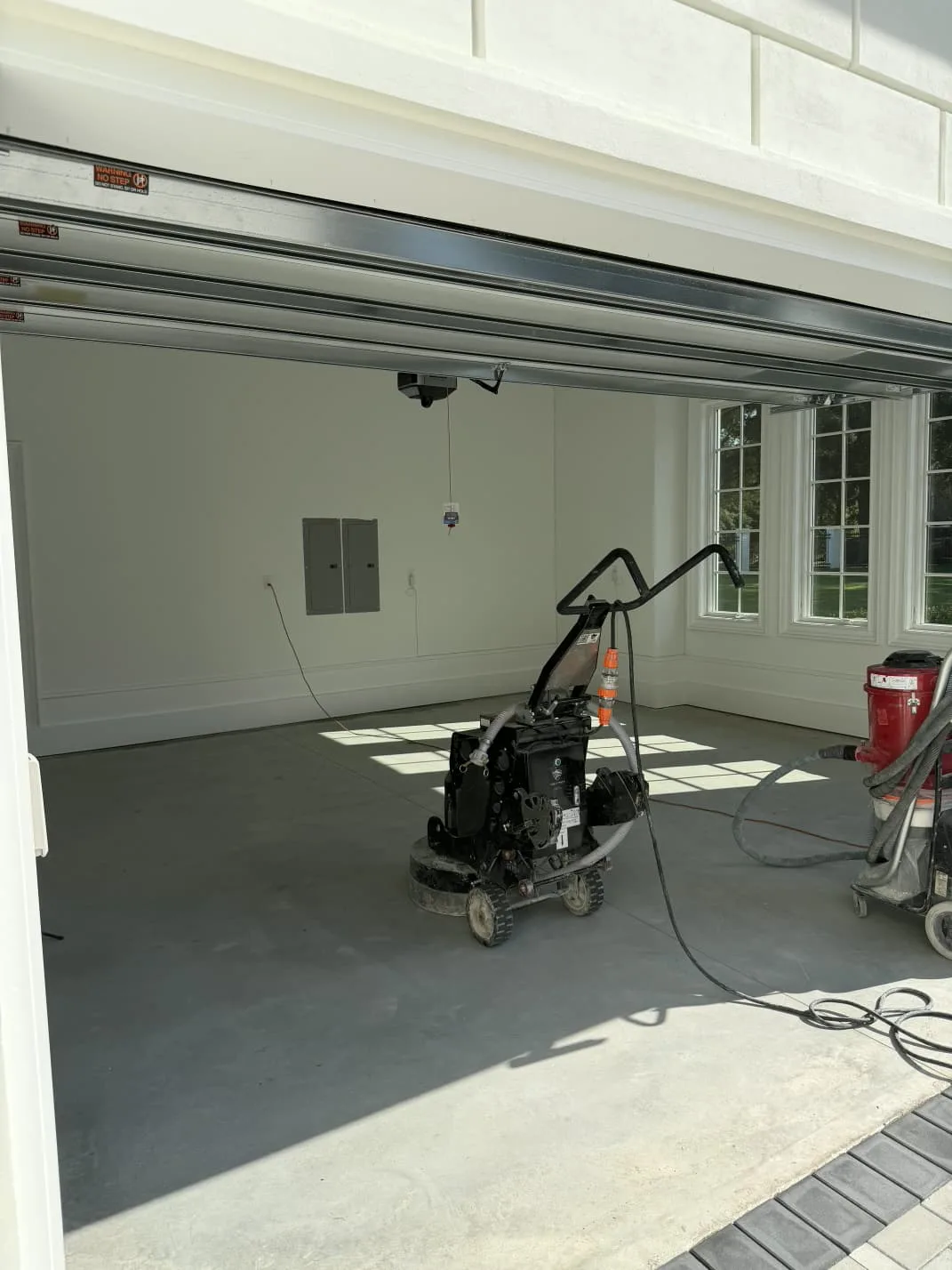
Every good floor starts with a loud first day.
We diamond grind the slab down to open concrete before any resin touches it. Our own grinders, a dust extractor on every one, and cracks filled the right way.
Insured and bonded · 5 years · the owner on every job
Tell us about the slab
Snap a few photos and guess the square footage. That is enough for a real number.
Why we bought the grinders.
The part of the job you never see afterward is the part that decides how long the floor lasts.
Every coating we put down sits on concrete that got diamond ground first. The grinder cuts the tired top layer of the slab away and leaves an open, rough surface that resin can lock into. Skip that and the coating ends up bonded to dust, old sealer and whatever else has built up since the slab was poured.
Renting a grinder by the day puts a clock on the most important hours of the whole job. A clock pushes people to call a slab finished when it is only close. We own our grinders and dust extractors outright, so they stay on the floor until the concrete is right, and then they go back on the trailer.
Grinding is loud and dusty, and it eats most of the labor on day one. We would still rather spend an extra hour there than a whole day fixing a floor that let go!

Where the dust actually goes.
People hear the word grinder and picture a cloud rolling through the house. It does not work like that.
Each grinder is hooked to a dust extractor right at the tool, so the dust gets pulled in at the spot where the diamonds are cutting. In this room, stripped to bare concrete, you can see the pair parked against the back wall: a green grinder and a red extractor.
Some dust still gets loose, and we will be straight with you about that. Doorways into the rest of the house get sheeted off before we start, which keeps whatever escapes inside the room we are working in.
Rooms inside the house get the same setup as a garage. Same machines, same plastic over the doors.
Old finishes come off with the top of the slab.
Lots of the slabs we walk already have something on them. That is rarely a problem, because the grind takes it all down together.
Painted garage floors
Paint sits on the surface, and the diamonds cut below it. It comes up as powder and goes straight into the extractor. Once it is gone, the new coating goes down on bare concrete where it belongs.
Sealer that gave up
Failed sealer flakes and peels. Resin poured over it would only be as strong as that sealer, and that is not strong at all. Grinding takes it off and gives the new floor a clean start.
Earlier coatings
Most coatings from a previous job come off in the grind, store kits included. If one is lifting because of moisture underneath, we figure that out and tell you before you ever see a quote.
The first two days
Grinders, extraction and the mixing gear roll off the trailer early. Day one belongs to the grind and the crack repair, and it is most of the labor. Day two is the pour and the topcoat, which goes a lot faster. Light foot traffic is fine the morning after. Give it three or four days before a car parks on it, a bit longer when the weather runs cool.
A crack gets wider before it gets filled.
Grinding shows you what the slab has been hiding. Hairline cracks, small pits, a joint that chipped along its edge. On sandy ground a slab moves a little with the seasons, so some cracking is normal.
A hairline crack filled as it sits gives the repair material almost nothing to grab. So we chase each crack out into a V with the grinder, clean it, and fill it with a rigid repair resin. Pits get patched and then ground flat again, so the finished floor reads as one surface.
Control joints are a different story. Those cuts are in the slab on purpose, to give the concrete somewhere to move. Fill one solid and the movement finds a new path, usually straight up through your new finish. We treat control joints so they can still flex without splitting the coating above them.
Coat straight over a crack and you will see that line again in the finish within a year.
No number until the slab gets tested.
Plenty of older houses around Wayne County sit on slabs poured without a vapor barrier. For years that was simply how it was done. Those slabs push moisture up into the concrete every day, and eight humid months a year keep it coming.
A coating that cannot breathe traps that moisture. It collects under the finish and lifts it. So before we hand you a price, we test. If your slab is too wet for the system you picked, you hear that from us, along with a system that can handle it.
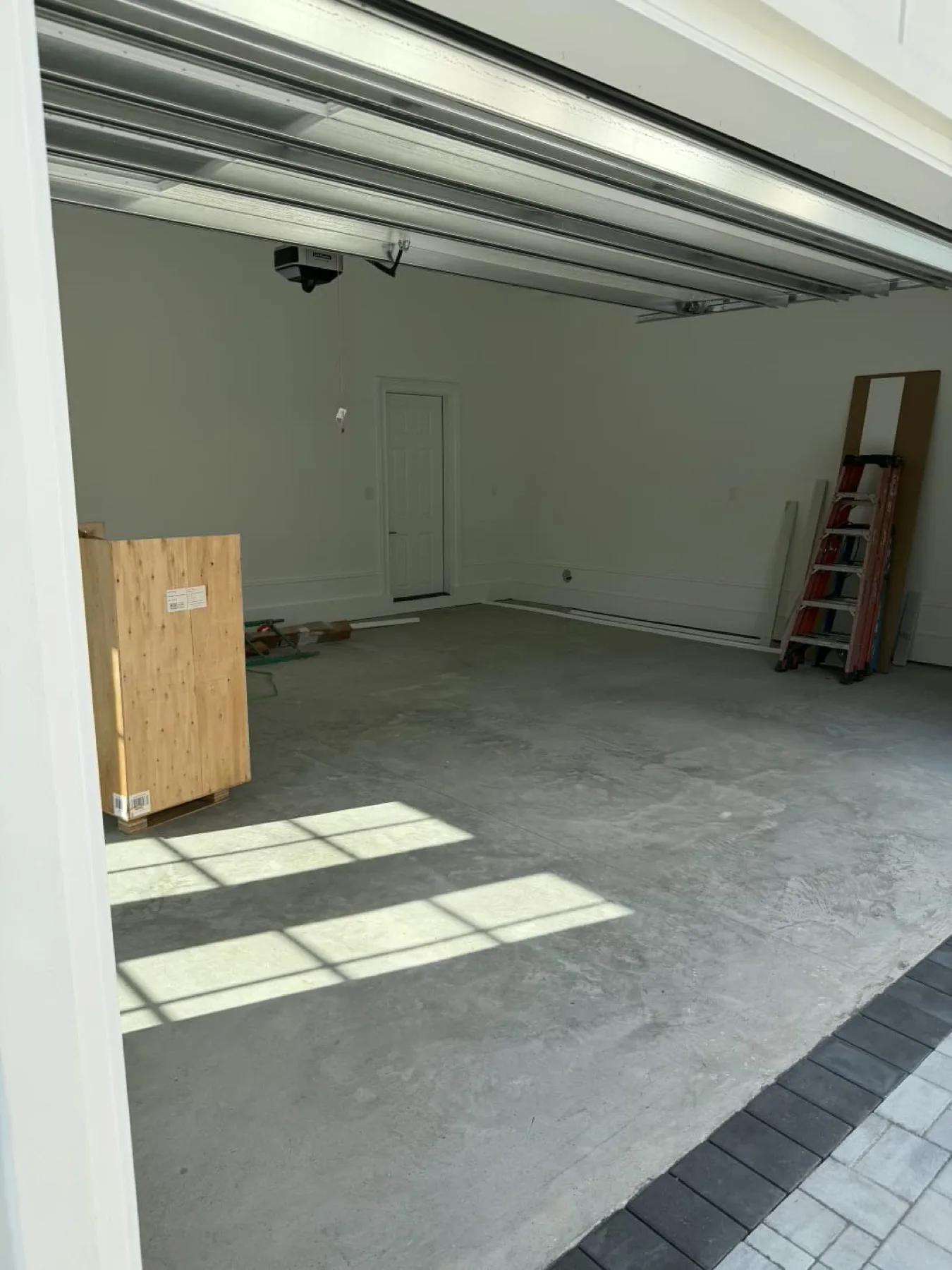
Mount Olive is Wayne County work for us, same as Goldsboro. The grind is day one on everything we do in town. The Mount Olive pages below cover what goes on top, the concrete grinding page covers every town we work, and the Mount Olive page has the rest. Curious what yours needs? Send photos of the slab.
Straight answers on slab prep.
Why not rent a grinder and prep the floor myself?
You can, but a day rental puts a clock on the slowest and most important part of the job. The machine goes back whether the slab is ready or not. We own ours, so the grind keeps going until the concrete is fully open and clean.
Will you sheet off the doors into the house?
Yes, every time. Doorways get covered in plastic before the grinder starts, and the extractor pulls dust in right at the tool. A little still gets loose on a grind day. Sheeting keeps that little bit in the room we are working in.
Can old paint or sealer stay under the new coating?
No. A new coating is only as strong as whatever it is bonded to, and old paint or tired sealer is weak. Both come off in the grind with the top of the slab, along with most earlier coatings. The new floor goes down on bare, open concrete.
What do you do with the control joints?
We treat them so the slab can keep moving at those lines. Control joints give concrete somewhere to shift. Filling one rigid like a crack just sends that movement somewhere else, often right through the finish. Cracks get the rigid fill. Joints get treated so they can flex.
Why test for moisture before quoting?
A lot of older slabs around Wayne County have no vapor barrier under them, and they push moisture up all the time. Trapped under the wrong coating, that moisture lifts the floor. A test tells us which system will hold on your slab, so the quote matches the floor you actually have.
Do you grind rooms inside the house too?
Yes. Garages are the bulk of the work, but interior rooms get the same machines and the same dust setup. The room needs to be empty and the doorways get sheeted. After the grind, the cracks get chased out and filled, same as any garage.

Tell us what is on your floor.
Send a few photos and a rough square footage. We will tell you what has to come off and what needs repair, then come walk it.
Call and Beto Ponce picks up. Or open the gallery and look at floors that all started with a day of grinding.
(919) 440-1333