

Mount Olive flake floors, from the garage down the hallway.
Flake is the floor we put down more than any other. Colored vinyl chip goes into a wet base coat and a clear topcoat locks it in. Before any of that, the slab gets ground open.
Insured and bonded · 5 years · Beto broadcasts the chips himself
Flake floor quote
Which room, and about how big?
A stained slab still gets opened up first.
Chips cover color. They do nothing for a slab that will not hold a coating.
The garage in this photo is a common starting point: cream walls, nothing inside, and a bare slab that is blotchy and dark in patches. Plenty of people assume a busy chip blend will cover a slab like that, so the grind seems optional. It is not. Whatever stained that concrete soaked into the top layer, and a base coat laid over it bonds to the stain rather than to the slab.
We take that layer off with diamond tooling, on grinders we own, until the concrete underneath is clean and open. The cracks that turn up get chased out and filled. Then the base coat has something real to grab.
Beto does the grind and the broadcast himself, so the person reading your slab on the walk is the one fixing it on day one. The concrete grinding page for Mount Olive covers that first day in more detail.

How the chips end up locked in place.
Day two on a flake job is the part people like to watch.
The base coat goes down across the ground slab, and while it is still wet Beto throws vinyl chip into it by hand. He keeps going until the base underneath is buried and there is no bare spot left to find. Then the clear topcoat goes over the top.
That topcoat is the surface you actually live on. It seals the chips down and takes the scuffs, and it is why a flake floor wipes clean. Tire marks and the dust that blows in under a garage door disappear into the speckle, where on a flat color you would spot them from the doorway.
The texture pays off when the floor gets wet. Chips give a little bite underfoot, so a wet shoe or a dripping car does not turn the room into a skating rink. Where a space sees more water than usual, aggregate can go into the topcoat for extra grip.
That is the whole case for flake. It looks good, and it forgives a lot of everyday abuse.
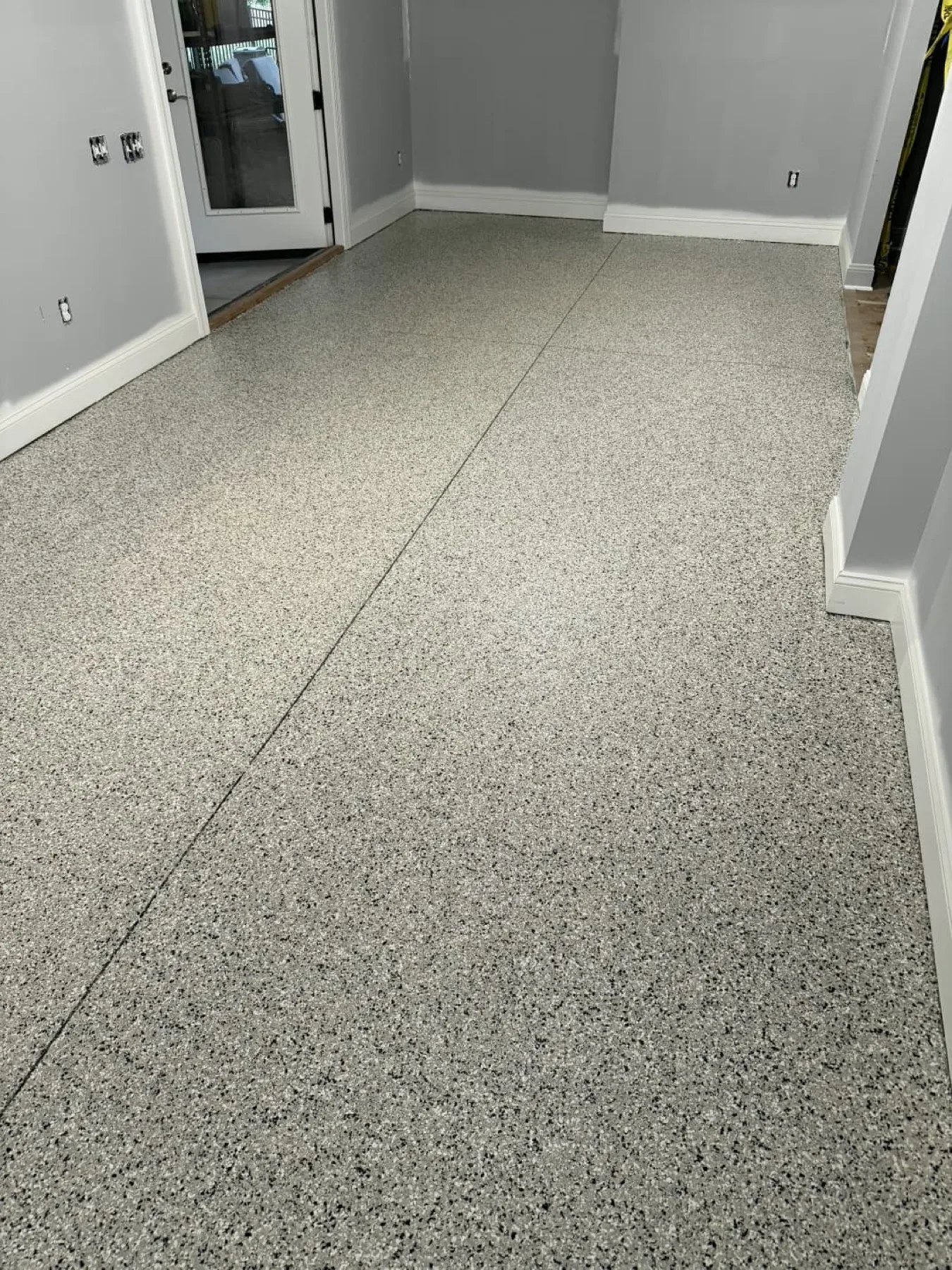
Once the garage is done, people look down the hall.
A lot of flake calls start about a garage and end with a second room on the list.
After living with a chip floor in the bay for a while, people start eyeing the laundry room, where water lands on the floor and grip counts. Then the sunroom. Then the basement steps. The hallway in this photo is one of those rooms, with gray flake running the length of a long narrow hall between white baseboards.
Inside the house the job changes a little. There is less to haul out than a garage, but doorways into lived-in rooms get sheeted, and the grinder runs into a dust extractor right at the tool so the dust is caught where it starts. It is not zero. It does not fill the house either.
For a slab that stays wet and takes heavy traffic at once, like a workshop, quartz can be the better system, and we will say so on the walk. For a working garage, the garage floor page for Mount Olive covers the schedule.
Eight humid months and a slab that breathes.
Wayne County sits on coastal plain, and that ground shapes how a flake floor gets planned.
The soil is sandy and the water table rises and falls with the seasons. For about eight months a year the air is thick with humidity. None of that is a reason to skip a floor. It is a reason to check the concrete before anybody talks numbers. A lot of older slabs around here went down with no vapor barrier under them, so they push moisture up every day, and a coating that traps it will eventually lift.
So we test first. If the slab is too wet for the system you have in mind, you will hear that plainly, along with a system that can handle it.
Spring and fall still fill up first. Calling about a month out gives you a real shot at the week you want.
Goldsboro is home. Mount Olive is a short drive.
Alpha Resin runs out of Goldsboro and covers 10 counties from there, and Mount Olive falls well inside that.
So do Dudley, Pikeville and Fremont. Look at more finished chip blends in the gallery, or send a few photos of the room and we will tell you what we see before anybody drives out.
Live out past the edge of town? Ask anyway. Town lines and county lines rarely match how far the trailer really has to go, and the answer is usually yes. Small rooms count too. A single laundry room or one hallway is a normal job for us, and it is how a lot of people try a chip floor before they hand us the garage.
Chip floor questions from Mount Olive
Will a flake floor show tire marks?
Much less than a solid color would. The speckle breaks up the surface, so a tire mark or a film of dust lands among chips in similar tones and blends in. You will still want to sweep it, but you will not see every mark from the door.
Is flake a good choice for a laundry room?
It is one of the rooms we like it in most. Water ends up on laundry room floors, and chip texture gives shoes some grip when that happens. If the room also takes heavy traffic along with standing water, quartz is worth a look, and we will talk through both.
Do you check the concrete for moisture first?
Every time, before we give you a number. Plenty of older slabs in the area were poured with no vapor barrier, and they push moisture up through the concrete. If yours is too wet for flake, we say so and price a system that is built to handle it.
Can flake go over a floor that was painted before?
Yes, once the paint is gone. Old paint and failed sealer come off during the grind along with the top of the slab, and the base coat then bonds to clean, open concrete. A floor with a lot to remove takes longer on day one, and the quote accounts for that.
How soon can we use the room again?
Walking across it is fine the morning after the pour. Heavier use, like parking a car or moving furniture back in, waits until day three or four. A warm room gets there sooner than a cold one, so the exact day depends on the weather that week.
Can flake go on basement steps?
Yes, as long as they are concrete we can grind. Steps take more hand work than an open floor does, so they add some time to the job. The chip texture is a good fit anywhere people go up and down in socks or wet shoes.

Which room are we talking about?
Send photos of the floor and roughly how big the room is.
Paint or an old coating on it now? Put that in the note. Or skip the form and dial the number below, which rings the owner’s own phone. Finished chip floors are in the gallery.
(919) 440-1333