
A floor with the grip built right in.
Quartz epoxy is graded sand locked into resin, and the texture is the whole point. It keeps its grip when the floor is wet. For laundry rooms, mudrooms and shop floors around Pikeville, poured by the owner.
Insured and bonded · 5 years in business · poured by Beto, start to finish
Quote on a quartz floor
Tell us the room and roughly how big it is. A photo of the floor helps.
What a quartz floor is made of.
A quartz floor is layers of resin and sand, built up on a slab that has already been ground down to open concrete.
First a coat of resin goes down. While it is still wet, graded quartz sand gets broadcast across the whole floor and left to settle into it.
Once that has cured, the loose sand gets swept off and a clear topcoat goes on to lock the grains in place. The result is a hard shell with a fine, even texture you can feel through your shoes.
That texture is why people choose it. Smooth epoxy mops easily and turns slippery the moment it gets wet. Quartz keeps its footing with water on it, and the sand also stiffens the surface against dropped tools, chair legs and boots coming in from the yard.
Of everything Beto installs, quartz is the toughest. It is also the plainest to look at. Nobody picks it for a living room to show off, and that is fine, because it was never meant for that room.
Where wet feet and hard traffic meet.
Quartz earns its place anywhere water and foot traffic show up at the same time. In most Pikeville houses that comes down to a handful of rooms.
Laundry rooms
A washer that leaks once, a basket of damp towels set on the floor, a sock that never quite dried. Quartz takes all of it and stays sure underfoot.
Mudrooms and back entries
The door in from the yard sees sand, rain and muddy boots every day of the week. A textured floor does not get treacherous when the mat is soaked through.
Workshops
Dropped wrenches, rolling stools and a spill under the bench. The sand-filled surface shrugs off knocks that would chip a thin coat, and it gives you footing when something wet hits the floor.
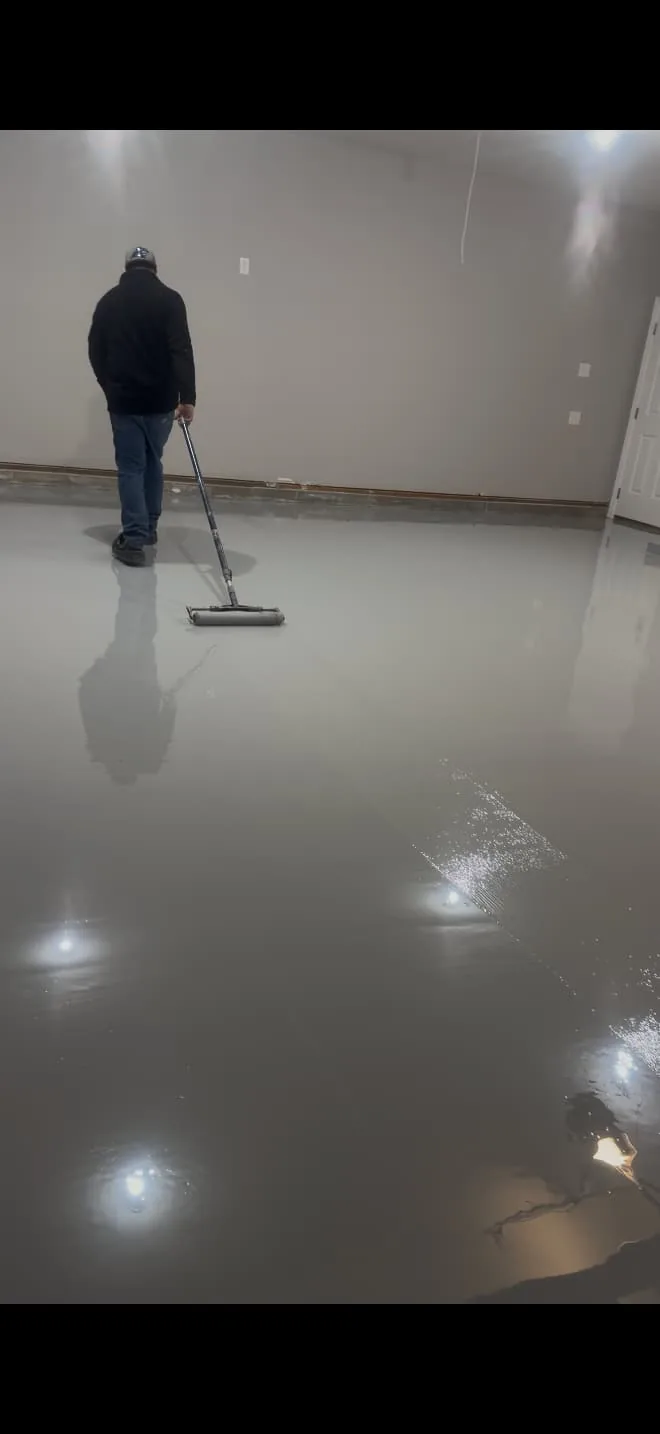
Most of these rooms begin like the one in the photo, stripped back to bare concrete with the grinder waiting at the far wall.

How rough is rough enough?
Grip and easy cleaning pull against each other. The more texture a floor carries, the better it holds a wet boot, and the more a mop drags across it.
On a quartz floor, the feel comes down to the topcoat. A heavier topcoat fills the gaps between the grains and softens the surface. A lighter one leaves it sharper. That gets decided room by room, based on how wet the floor gets and who walks on it.
A laundry room that sees an occasional puddle can sit toward the smoother end. A shop where oil and wet boots are routine should feel the texture with every step.
Barefoot rooms get the gentler finish. Nobody wants to feel sandpaper on the way to the dryer late at night.
Either way, the grains stay locked under the topcoat. They do not work loose and track through the rest of the house, and the floor keeps the same feel from one end of the room to the other.
Quartz, flake, or something else entirely.
Flake is the close relative. It gets built the same basic way, with a broadcast into wet resin, except the broadcast is vinyl chips. Chips are softer and busier to the eye, and that busy pattern hides dirt, which is why most garages go flake.
Sand gives a harder shell and a tighter, more uniform grain. So the dividing line is simple enough.
Pick quartz for the room that gets wet. Pick flake for the room that gets dirty.
Still on the fence? The Pikeville epoxy flooring page walks through how Beto matches a system to a room on the walk-through.
Some slabs are better off with no coating at all. A concrete sealing job keeps bare concrete looking like concrete while it stops soaking up every spill. For slabs outside the house, the patio coatings and pool deck coatings pages cover finishes made for wet feet in the sun.
None of this matters if the slab is wet. Plenty of older homes in this county went down with no vapor barrier under them, and moisture coming up through the concrete will lift quartz as surely as anything else. The test comes first on every job.
Two days, and the second one is quick.
The first day belongs to the grinder. It cuts away the old finish and the top skin of the slab, the cracks and pits get filled, and the dust is caught at the tool and vacuumed up behind it.
The second day is resin, sand and topcoat, and it moves faster than people expect. Walking through the next morning is fine. If the room is a garage shop, the truck stays out until day three in warm weather or day four in cool weather.
Weather decides when that second day happens. Resin cures by a chemical reaction, so a cold slab drags it out, and a hot, sticky garage in August speeds it up and shortens the window for spreading sand evenly. Beto checks the slab temperature and the humidity before anything gets mixed, and he moves the date if either one is wrong for a broadcast.
Empty the room completely before the first morning. In a laundry room that includes the washer and dryer, since the floor runs wall to wall underneath them.
Pikeville is a short haul from Goldsboro, where we are based, and it sits inside Wayne County. The quartz epoxy flooring page covers the service in every town we work, and the Pikeville page has the rest of our work there. Want a number on your room? Ask for a quote and send a photo along with it.
Straight answers on quartz floors.
Is a quartz floor rough on bare feet?
Not if the texture is set for the room. A laundry room or mudroom floor feels like fine sandpaper that has been worn soft, and it stops registering after a while. A shop floor can be left grittier on purpose, since nobody in a shop walks around barefoot.
How is quartz different from a flake floor?
Both start with a broadcast into wet resin. Flake uses vinyl chips, which hide dirt well and suit most garages. Quartz uses graded sand, which gives a harder surface and a finer, more even texture. If water is the main problem in the room, quartz is usually the better fit.
Can quartz go in a garage?
It can, and it holds up well under cars. Most people still pick flake for a garage because the chips hide tire marks and dust better. Quartz makes sense in a garage that doubles as a workshop, or one where a car gets washed inside and the floor stays wet.
Does the texture make it hard to clean?
A little harder than smooth epoxy, yes. Sweep or vacuum first so the grit comes out of the texture, then mop with warm water and a mild cleaner. A soft brush handles anything that has dried on. Skip harsh solvents and the topcoat keeps its finish.
Will quartz stop a floor from lifting on a damp slab?
No. Texture has nothing to do with moisture. If vapor is coming up through the concrete, any coating sealed over it can lift, quartz included. That is why every slab gets a moisture test first, and why a damp one gets a system built to handle it.
Can you put quartz over old vinyl tile?
Not over it. The tile comes up, and the glue under it comes off in the grind, because resin has to bond to clean concrete to hold. Once the slab is bare and tested, quartz goes down the same as anywhere else. A tile floor just adds work to day one.

Ask for a quote on the room that gets wet.
Tell us which room it is and roughly how big, plus a picture of the floor as it looks today. Beto will say whether quartz is the right call before he comes out to test the slab.
The phone goes to Beto Ponce, and nobody screens it. Finished floors are in the gallery if you would like to look around first.
(919) 440-1333