
Before anybody puts a number on your floor, Beto walks it. Here is what he is looking at, and why the price waits until he has seen the slab.
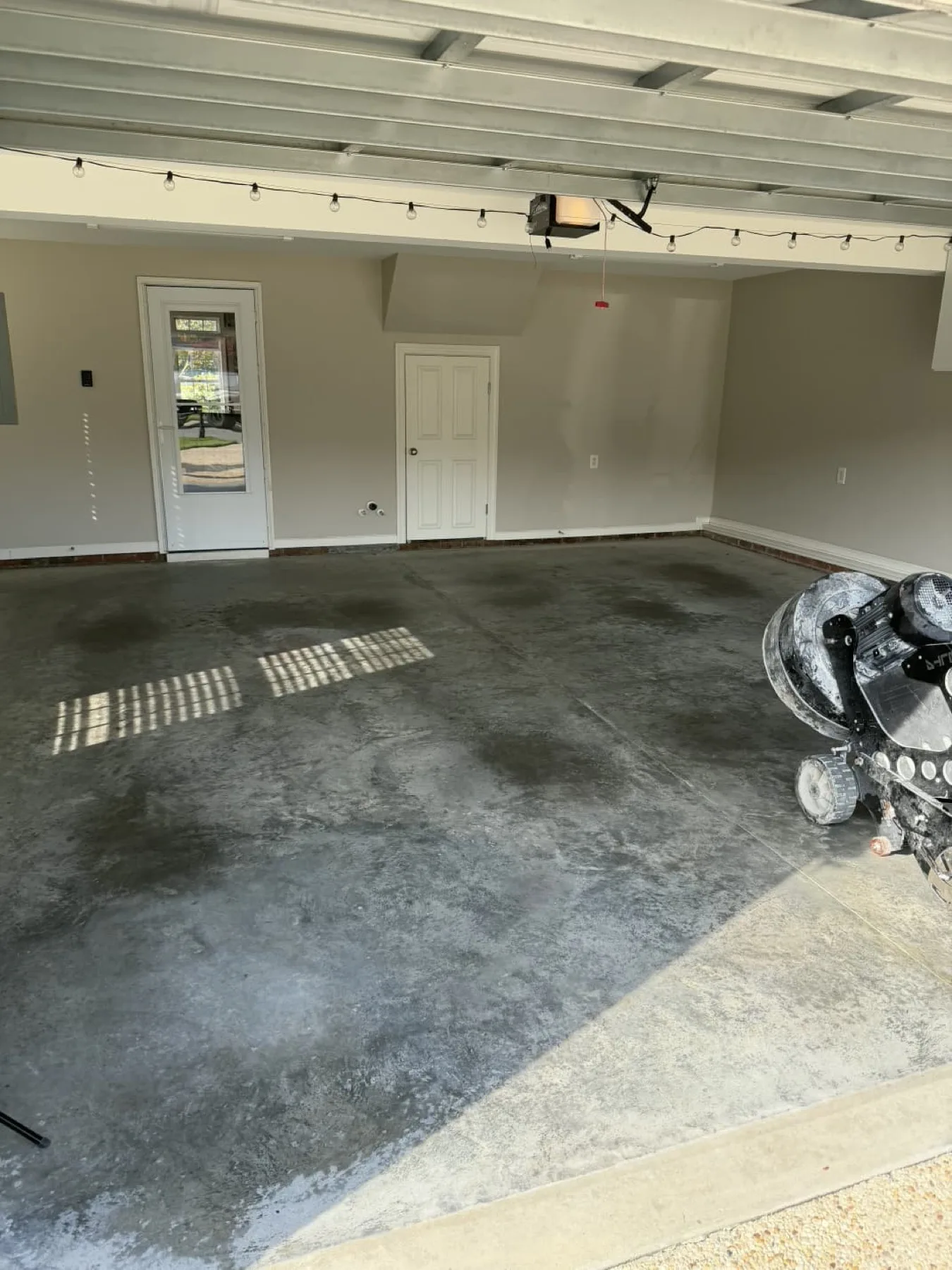
A lot of calls start the same way. Somebody wants a price for a two-car garage before anybody has seen it. That is a fair thing to want. You would like to know whether this is even worth a visit. The trouble is that a phone number for a slab nobody has looked at is a guess, and guesses are how floors go wrong.
So every floor we pour starts with a walk-through. Beto does it himself, since he is the one who will grind that slab and pour it. Here is what he checks when he comes out to a garage in Pikeville or anywhere else in Wayne County, and what each of those things tells us about the job.
What is already sitting on the concrete
The first stop is the surface. Oil drips under the spot where the truck parks. A paint spill from a project years back. A clear sealer somebody rolled on and forgot about. A coating from a previous owner that is starting to flake by the door.
None of that scares us. Most of it comes off in the grind. What it does is change how much grinding the job takes, and that is real time on the machine. A bare slab that has only ever seen dust grinds clean fast. A slab under a failing coating takes longer, and sometimes the old material hides a problem that only shows once it is gone.
We also look for spots where something has soaked in deep. Oil that sat for years can wick down into the concrete. The grind takes off the top, and then we look again.
That is why we would rather see it in person. A photo shows a dark stain. It cannot show whether that stain is a skin on top or something that has been soaking in since the house was new.
Reading the cracks
Next come the cracks. Almost every slab out here has a few. This is sandy coastal plain ground with a water table that moves through the year, and concrete poured on it shifts a little as it ages. Fine hairline cracking from that is normal. It gets chased out and filled during the grind so it never prints through the finished floor.
The ones Beto slows down for are different. If one edge of a crack sits higher than the other, or the gap is wide enough to catch the toe of a shoe, the slab may still be moving. Patching it and pouring over it will not hold that movement back, and the new floor tends to split along the old line.
Most garages only have the first kind. If yours has the second, you hear about it on the walk-through, standing right over the crack, instead of months after the floor is down.
The moisture check, every single time
Then we test for moisture. Every slab, every time, no exceptions.
Plenty of homes around here were built before anybody routinely laid a vapor barrier under the concrete. On those floors, water vapor comes up through the slab every day. You cannot see it. A slab can look bone dry and still be pushing moisture up from below.
Bare concrete lets that moisture escape. Put a coating on top that cannot breathe and the moisture gets trapped under it. That is one of the main reasons a floor lifts and peels, and it has nothing to do with the resin.
So the test happens before we quote. If the slab is dry enough for the system you want, good. If it is too wet, we will say so straight and price a system that can handle it, or tell you a coating is the wrong call for that floor. The point is finding it on the visit, when changing course is easy.
How you use the room picks the floor
After the concrete, we ask about the room. What parks in it. Whether anybody works in there. Whether water gets tracked in from the yard. Whether it is a showpiece or a space that has to take a beating.
That decides the system more than any color card. A garage with two cars and a few bikes usually ends up in flake, which hides tire marks and dust and gives you grip. A room you want people to stop and stare at might be a metallic pour, where the pattern moves while the resin cures and no two floors come out alike. A workshop where water and traffic show up together often points to quartz, graded sand set in resin with the grip built into the texture.
Our Pikeville epoxy flooring page lays out how those choices play out, and if you already know the room is a shop, the quartz floors page goes deeper on that one. The gallery has all three side by side.
Why the number comes after the walk
Once Beto has seen the slab, tested it and heard how the room gets used, he can price the actual job. The number you get that day is the number you pay. It does not grow halfway through because the grind turned something up, since the grind is exactly what he was planning for.
He also walks you through how the job runs. The room has to be completely empty the morning we start. Day one is grinding and crack repair, the loud and dusty part, and there is no color on the floor when we leave. Day two is the pour and the topcoat. Light foot traffic is fine the next morning. Cars wait until day three in warm weather and day four when it is cooler.
If a walk-through feels like more than you want to start with, that is fine too. Send us photos of the slab and the rough size, and we will tell you whether it lines up with what you had in mind.
Questions people ask about the walk-through
Am I committing to anything by having you come out?
No. There is no obligation. We come out, look at the actual slab, test it, and give you a number. If you want to think about it, think about it. If the timing is wrong, call back when it is right. Plenty of people get the walk-through, sit on it for a season, and book once the garage is finally cleared out.
What if my slab is a bad candidate for a coating?
Then we say so. Sometimes the slab reads too wet for the system someone had their heart set on, and we price one that can handle it. Sometimes a slab is moving enough that any coating would split over the same crack. We would rather walk away from a job than pour a floor we already expect to fail.
Do you come out for small jobs?
Yes. A single-bay garage gets the same walk-through as a big shop. Same moisture test, same look at the cracks, same talk about how the room gets used. Small work is a good share of what we do, and it is how a lot of people try us out before they trust us with a bigger floor.
Want your slab looked at? Use the contact page to send a photo or two and the rough size, and Beto will tell you what he sees. The person on the walk-through is the same person on the grinder.
Want a look at your slab?
Beto Ponce pours every floor himself. Call (919) 440-1333, send a couple of photos, or look through the gallery first.