
Small rooms with water in them are where a floor has to grip and hold. Here is what changes when the washer or the back door lives in the room.
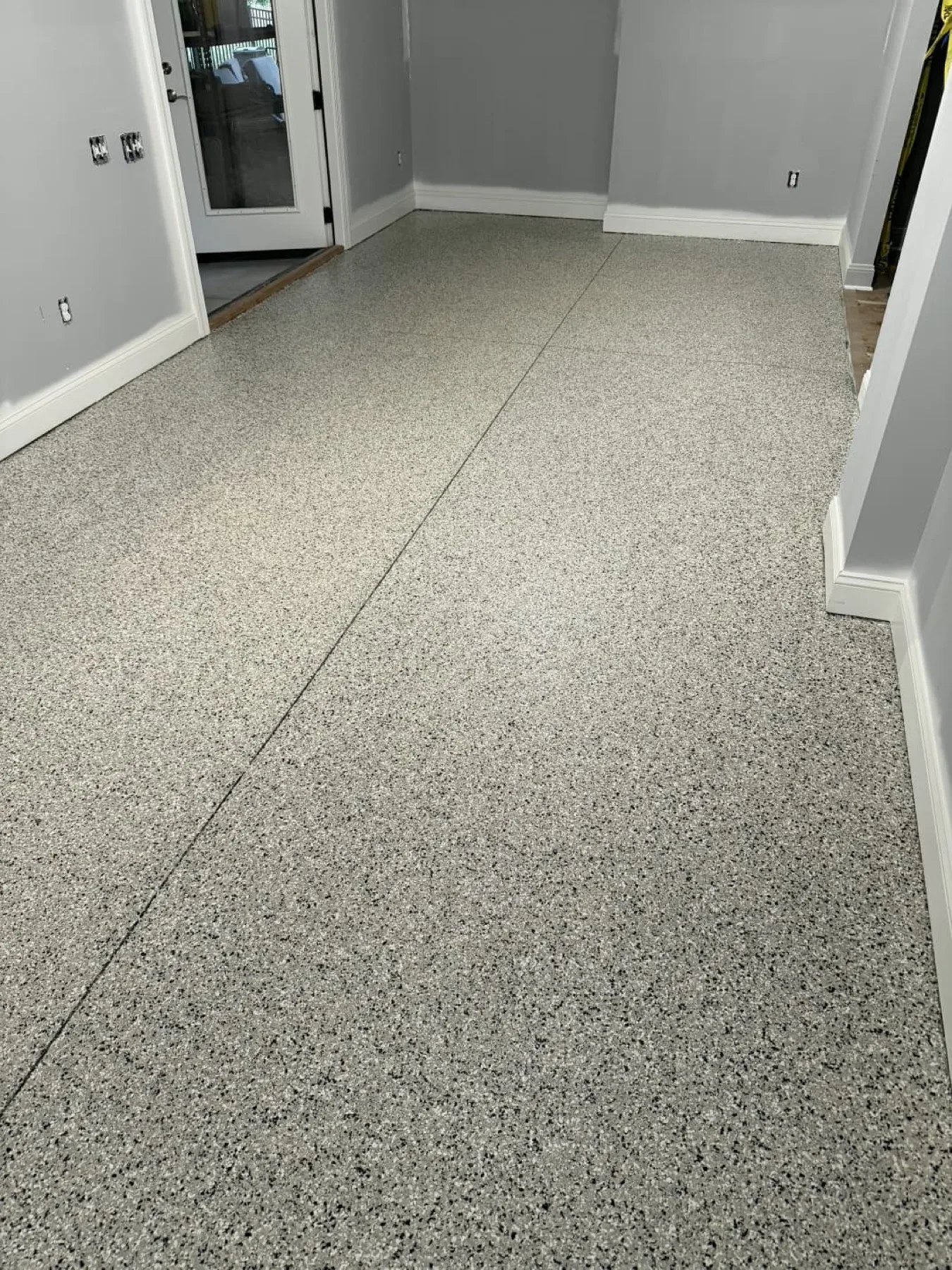
A laundry room or a mudroom is a small floor with a big job. Water shows up in there in ways a garage never sees. A washer hose lets go. Wet boots come through the back door. The dog comes in from the yard after a storm and shakes off right in the middle of it.
The coating itself does not change much from room to room. What changes is the grip, the edges, and how carefully the slab gets prepped in a tight space. People around Dudley and the rest of Wayne County ask me about these rooms a lot, so here is how I think about them.
What water does on a finished floor
A coated floor is sealed. Water sits on top of the topcoat and wipes up. It does not soak into the concrete the way it does on a bare slab. That is the good news.
The other side of it is that a smooth topcoat is slick when wet, the same as polished concrete. In a garage you mostly feel that when a car comes in from the rain. In a laundry room or mudroom it happens every day. Wet socks, a splash from the washer, a puddle by the door.
So the finish matters more here than almost anywhere else in the house. A room that sees water and foot traffic together needs a surface that grips when it is wet. That changes which system I recommend and how the topcoat gets finished. A leaking washer is one kind of water; a damp slab underneath is a separate question we check before we quote.
Grip: flake, quartz, and aggregate in the topcoat
Flake gives you real grip. The chip leaves a slight texture in the surface, and wet shoes behave on it. It also hides the dirt that comes in with the water. For a lot of mudrooms, flake is the right floor.
Quartz is the toughest thing we install. It is graded sand set in resin, with the slip resistance built into the texture itself. It belongs in rooms where water and traffic show up together, and that describes plenty of laundry rooms and back entries.
Then there is the topcoat. On any of these we can broadcast an aggregate into the topcoat so it grips when wet. Say the word and we will spec it. You give up a little gloss and get a floor you do not think about with wet feet.
Which one fits comes down to how wet the room gets and how much the look matters to you. A mudroom that opens off a flake garage might match the garage. A laundry room where the washer has leaked before might want quartz. I would rather see the room than guess.
The grind still comes first in a small room
The sequence does not change because the room is small. We diamond grind the slab down to clean, open concrete. Then we chase and fill the cracks the grind exposes. Then we pour and topcoat.
Small rooms are harder to grind well. There are more corners, more edges, and less space to move the machine. That is exactly where a rushed job stops short. We grind into the corners so the coating runs clean to the edge, because the edges are where a floor starts to let go.
The grinder runs into a dust extractor at the tool, so the dust is caught where it is made. Inside the house that matters. It is not zero dust, and it is far less than people picture.
Old paint, failed sealer and most previous coatings come off in the grind. If the room had vinyl or tile over the concrete before, tell me when you send photos so I know what is coming off. There is more on how we prep a slab on the Dudley concrete grinding page.
Mudrooms and what comes in the back door
A mudroom takes a beating a laundry room does not. Boots with gravel stuck in the tread. Sand off the yard. A wet dog. Bags of groceries set down on the way in. It is garage traffic in a room inside the house.
The clear topcoat takes that wear so the color under it never gets touched. Grit is still what dulls a floor over time, so a mat outside the door and a dust mop inside do a lot of work. Lift the inside mat and clean under it now and then so water does not sit trapped against the floor.
Cleaning is the same as any of our floors: a soft mop and a bucket of mild soapy water. Stay off acid based cleaners and citrus solvent cleaners, since both go after the topcoat.
If the back door opens straight onto a sandy yard, pick a flake blend with some tan and gray in it. It hides the sand that is going to come in no matter how good everybody is about wiping their feet.
Getting the washer and dryer out and back in
The room has to be completely empty the morning we start, because we grind the whole slab. That means the washer and dryer come out, along with the shelves, the baskets and everything sitting on the floor. Decide where they go before the day, not the morning of.
Have the water shut off and the washer disconnected before we arrive, by you or whoever normally handles that. We are floor people. I would rather nobody guess at a hose connection on install day.
Light foot traffic is fine the next morning. Heavy appliances wait longer, and I will give you the day for that once I see how the floor is curing. A few days of laundry somewhere else buys you a floor ready for the next leak.
If there is a floor drain in the room, point it out in your photos. We plan the pour around it so water still has somewhere to go.
Laundry room and mudroom questions
Is a coated laundry floor waterproof?
The surface is sealed, so a spill or a small leak sits on top and wipes up. Water does not soak into the concrete through the coating. Still wipe it up quickly. A big leak left overnight can run under the walls and baseboards, and those parts of the house are not coated.
Will it be slippery with wet feet?
A smooth, glossy topcoat is slick when wet. That is why these rooms usually get flake, quartz, or aggregate broadcast into the topcoat. Each one adds grip in its own way. Tell me how wet the room gets and who is walking through it, and I will spec the finish to match.
Can the coating turn up the wall a little?
It can. On some floors the coating runs up a small cove at the base of the wall, which gives spills a clean edge to wipe instead of a seam. Whether it makes sense depends on the room and the baseboards you have. We decide that when I come look at it.
Send a couple of photos of the room and the rough size through the contact page, or call me at (919) 440-1333. I will tell you what I am seeing and which floor fits.
Want a look at your slab?
Beto Ponce pours every floor himself. Call (919) 440-1333, send a couple of photos, or look through the gallery first.